
Platforms
Solutions
Products
Services
Resources
Company
About Us
Clientele
Events
Careers
Disclosures
Media Kit
Contact Us
Contact Us

Platforms
Solutions
Products
Services
Resources
Company
About Us
Clientele
Events
Careers
Disclosures
Media Kit
Contact Us
Contact Us
 Resource

For telecom operators, BSS Transformation has become a strategic imperative rather than an optional modernisation initiative. Legacy BSS platforms are increasingly being replaced or modernised to support digital services, AI-driven operations, cloud-native architectures, and evolving customer expectations.
While most transformation programmes focus on technology adoption, telecom leaders face a different question: How do you know whether your BSS transformation is delivering business value?
A successful transformation should not be measured by how many systems were migrated or how quickly new software was deployed. Instead, evaluate it based on measurable improvements in operational efficiency, customer experience, revenue growth, and business agility.
Understanding the right metrics allows telecom operators to move beyond implementation milestones and assess whether their transformation investments are generating meaningful returns.
Return on Investment (ROI) in BSS Transformation extends beyond financial gains. While reducing costs and increasing revenue remain important objectives, modern transformation initiatives also create value through operational improvements, faster innovation, and improved customer experiences.
A comprehensive approach to measuring ROI considers both quantitative and qualitative outcomes.
 By measuring both operational and business outcomes, operators gain a more complete understanding of transformation success.
Historically, telecom operators evaluated technology investments primarily through capital expenditure, cost reduction, or project completion metrics.
However, digital business models have fundamentally changed how value is created.
Today’s BSS platforms support:
Many of these capabilities generate value gradually rather than immediately.
For example, implementing API-first architecture may not reduce costs on day one, but it can significantly accelerate future service launches and ecosystem integration.
Similarly, AI-enabled automation may improve customer retention and operational efficiency over time, even if those benefits don't immediately show up in traditional financial metrics. As a result, telecom leaders must adopt broader performance indicators that capture both immediate operational improvements and long-term business growth.
Rather than measuring technology deployment alone, telecom leaders should evaluate transformation across business dimensions they can baseline, own, and trace to operational or financial outcomes. The KPI set should include time-to-market, order-to-activation cycle time, billing accuracy and revenue leakage, cost per subscriber or transaction, legacy decommissioning savings, care demand, digital self-service adoption, and NPS and churn impact.
One of the clearest indicators of transformation success is the ability to launch products and services faster.
Measure:
A modern BSS should enable operators to respond quickly to changing market demands.
Automation should reduce manual effort across key business processes.
Track metrics such as:
Improved efficiency directly impacts both operating costs and customer satisfaction.
Transformation should create opportunities for new revenue generation.
Measure:
These metrics show whether the platform enables business innovation rather than simply replacing legacy technology.
Customer-centric KPIs are becoming increasingly important.
Monitor:
A successful BSS transformation should improve every stage of the customer journey.
Modern digital platforms should make the business more adaptable.
Evaluate:
These indicators reflect how easily the operator can respond to future opportunities.
Track bill-run accuracy, billing disputes, credit and rebill volumes, revenue leakage, cost per subscriber, and cost per transaction. These measures expose whether simplification and automation are producing durable financial value rather than shifting effort elsewhere.
Monitor care calls per subscriber, repeat contacts, digital self-service adoption and completion, assisted-to-digital migration, NPS, and churn. Interpret these together: a fall in call volumes is not a benefit if failed journeys, repeat contacts, complaints, or churn rise.
Operators rarely begin with a clean before-and-after dataset. Metrics may be fragmented across billing, order management, CRM, digital channels, OSS, data warehouses, and partner platforms; definitions may vary by market; and infrastructure or support costs may be shared. Establish metric definitions, data owners, source systems, observation windows, and confidence levels before the programme starts. Where a reliable baseline does not exist, use a documented proxy, comparable cohort, or phased-rollout control group and state the limitation.
Benefits also need attribution rules. Separate improvements caused by the BSS programme from pricing changes, network upgrades, care-policy changes, channel campaigns, or market conditions. Report gross benefits, delivery and run costs, and confidence-adjusted net benefits rather than one unqualified ROI figure.
Some of the most valuable outcomes of BSS Transformation become visible only over time.
Separate outcomes by value horizon. Quick wins may include fewer manual touches, lower order fallout, shorter configuration cycles, and higher self-service completion. Medium-term value comes from stable migration, process redesign, and retirement of duplicated applications. Longer-term value may include lower unit costs, ecosystem revenue, reduced churn, and greater innovation capacity. Model payback as a range with explicit assumptions and sensitivity analysis, not as a universal timetable; it will vary with migration scope, estate complexity, decommissioning dependencies, adoption, and market conditions.
A credible business case includes more than licences and implementation services. It should account for data profiling, cleansing, reconciliation, and migration; parallel running and dual support; integration with OSS, network, identity, payment, tax, and partner systems; end-to-end regression and performance testing; cutover rehearsals and contingency; organisational change and training; and the temporary productivity dip that often follows go-live.
It should also measure whether legacy platforms are decommissioned. Hosting, maintenance, vendor support, specialist skills, and operational workarounds continue until systems, interfaces, data stores, and contracts are retired. Recognise savings only when those costs leave the run-rate.
Many operators unintentionally underestimate the value of their transformation programmes by focusing on the wrong metrics.
Some common mistakes include:
The most effective measurement frameworks combine operational, financial, customer, and strategic indicators.
Assess Csmart Digital BSS against the same operator-grade measures described above. Its agentic capabilities may support measurable outcomes, but operators should validate the business case within their own architecture, data environment, operating model, and migration scope.
The platform uses three types of AI agents—Design Agents, Execution Agents, and Optimisation Agents—across the concept-to-cash-to-care journey. Operators should translate these capabilities into testable hypotheses: which decisions will be automated, what controls and exception paths apply, which manual activities will be removed, and how benefits will be observed without weakening governance.
For time-to-market and order-to-activation, assess whether Digital Twins, pre-built workflows, and low-code/no-code design reduce elapsed time in representative offer and fulfilment journeys. Validate integration effort, regression scope, approval lead times, and production stability rather than assuming laboratory configuration speed will translate directly into end-to-end launch speed.
For revenue, care, and operational efficiency, measure incremental ARPU or conversion, billing accuracy, leakage, fallout, manual touches, self-service completion, care demand, and churn against an agreed baseline. Include false positives, exceptions, human review, and the operating cost of AI-enabled processes.
For platform agility, evaluate API coverage and conformance, integration lead time, partner onboarding, observability, security, performance, upgrade impact, and exit options. Test claims such as “free from vendor lock-in” through data portability, interface ownership, commercial terms, skills availability, and the effort required to replace or decouple components.
Scale credentials—such as deployments across 24+ countries, support for 50+ million subscribers, 500+ million daily transactions, 100+ workflows, and 15+ TM Forum Open APIs—should be supported by current, comparable references and precise definitions. Operators should request evidence for peak loads, availability, migration scope, production tenure, achieved outcomes, and the conditions under which those results were delivered.
The defensible conclusion is conditional: Csmart can contribute to faster launches, leaner operations, higher ARPU, and better customer experiences when its capabilities are integrated, adopted, governed, and measured successfully. A pilot or phased rollout with agreed baselines, acceptance criteria, benefit owners, and post-go-live measurement is stronger proof of ROI than capability claims alone.
BSS transformation is not simply a legacy replacement programme; it is an operating-model and economics change. Technology modernisation is an important milestone, but return on investment depends on measurable improvements in launch speed, order completion, billing integrity, unit cost, legacy retirement, digital adoption, customer outcomes, and revenue performance.
Telecom leaders should define baselines and ownership early, disclose data and attribution limitations, include transition and change costs, and track benefits by value horizon. This produces a business case that can withstand scrutiny after cutover—not just one that supports programme approval.
Csmart Digital BSS can be evaluated within this framework through phased deployment and evidence from the operator’s own environment, with benefits recognised only when they are observed, sustained, and reflected in the run-rate.
To learn more about maximising the ROI of your BSS Transformation with Csmart Digital BSS, contact us at reachus@covalensedigital.com or fill out the form here to connect with our team.
Author

Dhirendra has extensive expertise in telecom BSS/OSS and works on the Csmart Digital BSS platform at Covalense Digital. He focuses on modular, SaaS-based solutions that help communications and digital service providers serve the MNO, MVNO, MVNE, and IoT markets.

Digital BSS: The Cornerstone of Telecom Evolution in the 5G Era
Digital BSS: The Cornerstone of Telecom Evolution in the 5G Era
20 May 2025

API Monetisation: Transform Your Digital Assets into Revenue Streams with Enterprise iPaaS
API Monetisation: Transform Your Digital Assets into Revenue Streams with Enterprise iPaaS
04 Jul 2025

How Network APIs and NaaS Are Revolutionising Telecom Monetisation: A $72 Billion Opportunity
How Network APIs and NaaS Are Revolutionising Telecom Monetisation: A $72 Billion Opportunity
11 Jul 2025

WebLogic Performance Monitoring with Prometheus and Grafana
WebLogic Performance Monitoring with Prometheus and Grafana
21 Jul 2025

Double Trouble? Not with Digital Twins in Telecom
Double Trouble? Not with Digital Twins in Telecom
22 Jul 2025

Vibe Coding: Revolutionising Software Development with AI
Vibe Coding: Revolutionising Software Development with AI
23 Jul 2025

Dynamic Rule Evaluation in Spring Boot Using Camunda DMN and REST API
Dynamic Rule Evaluation in Spring Boot Using Camunda DMN and REST API
24 Jul 2025

Generative AI in Telecommunications: Driving Innovation and Operational Transformation
Generative AI in Telecommunications: Driving Innovation and Operational Transformation
28 Jul 2025

Beyond Traditional CRM: The Distinct Features of IoT-Integrated Solutions
Beyond Traditional CRM: The Distinct Features of IoT-Integrated Solutions
29 Jul 2025

A Complete Guide to Secret Management with HashiCorp Vault
A Complete Guide to Secret Management with HashiCorp Vault
31 Jul 2025

Launching an MVNO? Go Infrastructure-Free with Csmart Digital BSS
Launching an MVNO? Go Infrastructure-Free with Csmart Digital BSS
04 Aug 2025

Role of Server-Sent Events in Reactive Programming
Role of Server-Sent Events in Reactive Programming
07 Aug 2025

Building Event-Driven Architectures Apache Kafka and Schema Registry
Building Event-Driven Architectures Apache Kafka and Schema Registry
08 Aug 2025

Understanding the Power of Digital Marketplaces in Collaborative Telecom Ecosystems
Understanding the Power of Digital Marketplaces in Collaborative Telecom Ecosystems
12 Aug 2025

Top Strategies to Implement Resilient Software Architecture in Telecom and Enterprise Industries
Top Strategies to Implement Resilient Software Architecture in Telecom and Enterprise Industries
14 Aug 2025

Open APIs and Their Role in Telecom Innovation
Open APIs and Their Role in Telecom Innovation
18 Aug 2025

Elevating Customer Service Management with ServiceNow CSM
Elevating Customer Service Management with ServiceNow CSM
20 Aug 2025

Top Six Telecom Industry Trends in 2025
Top Six Telecom Industry Trends in 2025
26 Aug 2025

Magnificence Of ServiceNow ITOM Module and Its Features
Magnificence Of ServiceNow ITOM Module and Its Features
29 Aug 2025

Moving From Cloud-Based to Cloud-Native: Unlocking The Full Potential Of Cloud Computing
Moving From Cloud-Based to Cloud-Native: Unlocking The Full Potential Of Cloud Computing
29 Aug 2025

Deep Dive into React States From Imperative to Declarative Programming
Deep Dive into React States From Imperative to Declarative Programming
02 Sept 2025

Implementing Microservices on AWS: A Value Driven Architecture
Implementing Microservices on AWS: A Value Driven Architecture
03 Sept 2025

Taming the CORS Beast
CORS errors are essential for web security, protecting users and data integrity. Developers can prevent these issues by understanding their causes and using proper server-side configurations or proxy solutions. Emphasizing security and following best practices ensures a reliable web application environment
10 Sept 2025

From Automation to Autonomy: How Agentic AI is Transforming Telecom BSS Operations
From Automation to Autonomy: How Agentic AI is Transforming Telecom BSS Operations
17 Sept 2025

From Automation to Agency: What Agentic AI Means for BSS
See how Agentic AI reshapes BSS, from orchestration to pilots. Learn why telecom operators & vendors must prepare for agent-ready, cloud-native platforms today.
24 Sept 2025

Evolutionary Journey of DevOps
DevOps is a software development methodology or culture that aims to improve collaboration, communication, integration, and automation between software development (Dev) and IT operations (Ops) teams. CI practices gained prominence with the rise of tools like Jenkins, Travis CI, GitLab, CircleCI etc.
29 Sept 2025

Cybersecurity in Telecom: Guarding the Grid Against Evolving Cyber Threats
Cybersecurity in telecom means protecting systems, networks, and data from digital attacks, unauthorized access, damage and theft. Learn more in this blog.
30 Sept 2025

The Power of AI and ML in Testing
Discover how AI and ML transform software testing with automated scenario generation, intelligent prioritisation, predictive analysis, & self-healing automation.
06 Oct 2025

AI-Powered Telecom CRM: Transforming Customer Relationships in a Competitive Market
AI-powered telecom CRM solutions transform operations. Discover its key features in this blog: predictive analytics, seamless integrations, and automations.
09 Oct 2025

The Role of Agentic AI in Digital BSS
Learn how Agentic AI revolutionises Digital BSS for telecommunications operators through autonomous, intelligent agents that enhance operational efficiency and CX.
13 Oct 2025

Top 3 AI Tools to Increase Productivity of Java Developers
Discover how AI tools like Qodo, Cursor, and Spring AI transform Java development through intelligent code generation, automated testing, and enhanced productivity.

All About 6G Technology: Features, Benefits, and The Obstacles to Widespread Adoption
Explore all about 6G technology: its features advantages, and disadvantages in this blog. See how AI, ML, and IoT will transform wireless connectivity forever.
28 Oct 2025

BSS-as-a-Service: Powering Monetisation and Customer Experience
Transform telecom operations with BSS-as-a-Service: Streamline monetisation, automate billing, enhance customer engagement, and accelerate partner settlements.
28 Oct 2025

Rewinding to Move Forward: How Agentic AI Returns Human Intelligence to Telecom Order Management
Discover how Agentic AI brings human-like intelligence to telecom order management system, enabling autonomous orchestration and zero-touch order fulfilment.
31 Oct 2025

Agentic AI in BSS: Unlocking Autonomous Operations and Customer Value in the Telco Environment
Discover Agentic AI-Powered Telecom BSS use cases in this blog. Learn how Telco Agentic AI BSS enhances networks, billing, & CX through AI/ML-driven automation.
03 Nov 2025

Seamless Horizons: Redefining Digital Integration with Enterprise API Gateway
Discover how enterprise API gateway & iPaaS simplifies integration & enhances security, while improving scalability for digital ecosystems & business operations.
07 Nov 2025

Top Seven BSS Monetisation Use Cases Driving Revenue Growth in Telecom
Discover the top 7 BSS monetisation use cases in telecommunications. Learn how Agentic AI, 5G slicing, IoT, and usage-based pricing drive revenue growth for CSPs.
12 Nov 2025

Generative AI (GenAI): Unveiling New Telecom-Centric Potential
Explore generative AI challenges/opportunities in telecom. Discover how GenAI transforms CX via personalisation, predictive analytics, & intelligent automation.
18 Nov 2025

Empowering the Digital Economy: The Rise of the Digital Marketplace
Accelerate growth with a cloud-native digital marketplace that drives omnichannel sales, improves experiences, & fuels scalable digital commerce for enterprises.
20 Nov 2025

Leading the MVNO Revolution: Foolproof Solutions to Turn Challenges into Opportunities
Discover proven solutions for MVNOs to turn challenges into opportunities through AI innovation, 5G slicing, IoT solutions, partnerships and agile strategies.
20 Nov 2025

Boosting Java Application Performance with Distributed Caching
Learn how distributed caching boosts Java application performance. Explore strategies, compare Redis, Hazelcast, and Ignite, plus Spring Boot integration tips.
27 Nov 2025

Top Seven Digital CX Strategies That Are Redefining Telecom Success
Don’t lose customers to poor service? Here are the top 7 digital customer experience (CX) strategies for telecoms that help them reduce churn and improve CSAT.
28 Nov 2025

Redefining Customer Engagement With An Advanced Customer Value Management (CVM)
Discover how an AI/ML-driven Customer Value Management (CVM), tailored campaigns, and omnichannel engagement strategies help you redefine customer experience.
02 Dec 2025

Case Management: Pioneering the Future of Telecom Customer Service
Discover how Case Management transforms customer services and support with AI-driven workflows, faster resolution, and seamless CX for modern telecom operators.
05 Dec 2025

Top Six Telecom Trends For 2026
Expert insights on top six telecom trends 2026: Agentic AI networks, 6G readiness, Open RAN, satellite connectivity, digital ecosystems, & eSIM transformation.
11 Dec 2025

Mastering Complexity: The Future of Telecom Sales with CPQ
Discover how CPQ transforms telecom sales by streamlining Quote-to-Order processes, enhancing pricing accuracy and delivering personalised customer experiences.
16 Dec 2025

Top Five Cloud Transformation Strategies to Succeed in the Digital Era
Explore cloud transformation strategies driving serverless, edge, and hybrid cloud adoption to reduce costs, boost agility, & lead digital innovation at scale.
29 Dec 2025

iPaaS Security Best Practices: Protecting Data Across Integration Touchpoints
Secure integration touchpoints with iPaaS security best practices. Learn how encryption, MFA, API protection, monitoring, auditing, and compliance protect data.
13 Jan 2026

Accelerate Enterprise Integration with AI-Powered Csmart iPaaS
Accelerate enterprise integration with AI-powered Csmart iPaaS. Deploy workflows 50-70% faster, monetise APIs, and scale seamlessly with intelligent automation.
13 Jan 2026

The Need for Telecom Subscription Monetisation
Discover how Csmart Digital BSS accelerates subscription monetisation for telecoms. Transform revenue management, customer lifecycle management, pricing, & more.
14 Jan 2026

Modern CRM Features Redefining Customer Engagement with AI and Automation
Explore modern CRM features: AI-powered analytics, social listening, IoT integration, and cloud platforms that transform customer engagement and drive growth.
16 Jan 2026

From Connectivity to Commerce: How MVNOs Are Evolving into Digital Marketplaces
Discover how MVNOs are moving beyond connectivity to build digital marketplaces, unlock new revenue streams, and deliver personalised customer experiences.
21 Jan 2026

Building BSS for the API Economy: Beyond Connectivity to Programmable Networks
Discover how modern BSS platforms enable telcos to monetise programmable networks and APIs. Learn how commercial intelligence layer bridges the execution gap.
22 Jan 2026

The Future of Remote IoT: How Satellite Communication and Cloud Infrastructure Transform Global Connectivity
Discover how satellite IoT & AWS cloud infrastructure revolutionise remote connectivity. Learn about Short Burst Data (SBD) solutions for global IoT deployment.
23 Jan 2026

Migrating to Oracle PDC: A Complete Guide for Telecom Pricing Transformation
Oracle Pricing Design Centre (PDC) migration guide. Proven strategies, phases, data analysis, and best practices for OBRM to PDC telecom pricing modernisation.
27 Jan 2026

AI Subscription Analytics: The New Imperative for Customer Retention
Transform subscription growth with AI analytics. Discover how agentic AI and predictive intelligence drive behavioural insights, reduce churn, and maximise CLV.
27 Jan 2026

Top 5 AI Use Cases for Business Growth in 2026
Discover top AI use cases driving business growth. Learn how Starbucks, Netflix & Nike use AI for revenue growth, customer experience, & digital transformation.
27 Jan 2026

Oracle BRM Upgrade: A Strategic Roadmap to Near-Zero Downtime Migration
Expert Oracle BRM (OBRM) upgrade guide: Includes strategic migration planning, code merge, and Golden Gate replication for near-zero downtime implementations.
03 Feb 2026

From Automation to Autonomy: How Agentic AI is Redefining Industry 4.0
Explore how agentic AI capabilities are redefining Industry 4.0—from autonomous manufacturing systems to AI-powered digital marketplaces. Learn why 5G, IoT automation, and intelligent ecosystems are critical for business survival.
06 Feb 2026

Telecom AI Agent Swarms: Multi-Agent Orchestration Across Commercial and BSS Workflows
Discover how telecom AI agent swarms enable secure, governed, E2E orchestration across BSS charging, care, catalogue, procurement, sales, and self-assistance.
19 Feb 2026

The 2026 Guide to 5G Digital BSS Monetisation: Trends, Models & Benchmarks
Explore key market trends, six core 5G revenue models, AI adoption signals and CSP revenue benchmarks shaping the 5G Digital BSS monetisation strategy in 2026.
17 Mar 2026

How Intent-Based BSS Architecture Accelerates Telecom Monetisation
Discover how Intent-based BSS architecture accelerates telecom network monetisation with real-time charging, 5G slicing support, & outcome-based pricing models.
25 Mar 2026

Stream Processing Pipeline for Near-Real-Time Data Synchronisation to Support Personalisation Use Cases
Discover how we built a near-real-time data synchronisation stream pipeline using Apache Flink & SPP, delivering 99.9% uptime, sub-100ms latency, & 40% cost savings.
13 Apr 2026

Commercial Growth: How Telcos Can Monetise Enterprise Demand and Partner Ecosystems
Explore how telcos drive enterprise monetisation using digital BSS platforms like Csmart. Unlock revenues across B2B2X, partner ecosystems, network APIs, etc.
05 May 2026

Why AI-Native Code Generation Will Rewrite the Rules of Telecom BSS Innovation
Discover how AI-native code generation transforms telecom BSS with domain-aware automation, TM Forum alignment, and enterprise-grade governance you can trust.
06 May 2026

Vespa.ai: The Engine Quietly Powering Real-Time AI Search at Scale
Discover how Vespa.ai delivers real-time AI search, hybrid retrieval, and native ML in one engine. See why it outperforms Elasticsearch & standalone vector DBs.
30 Jun 2026

How Disconnected CPQ and BSS Systems Kill Telco Revenue Opportunities
Disconnected CPQ and BSS systems cost telcos millions. Learn how integrated BSS and CPQ sales solutions eliminate errors, accelerate quotes, and boost revenue.
16 Jul 2026

Autonomous AI Agents in Telecom BSS Are Ready. Most Governance Models Aren’t.
Autonomous AI agents in telecom BSS can now act on revenue. The question CSPs must answer is who authorises those decisions — and who is accountable.
10 Aug 2026
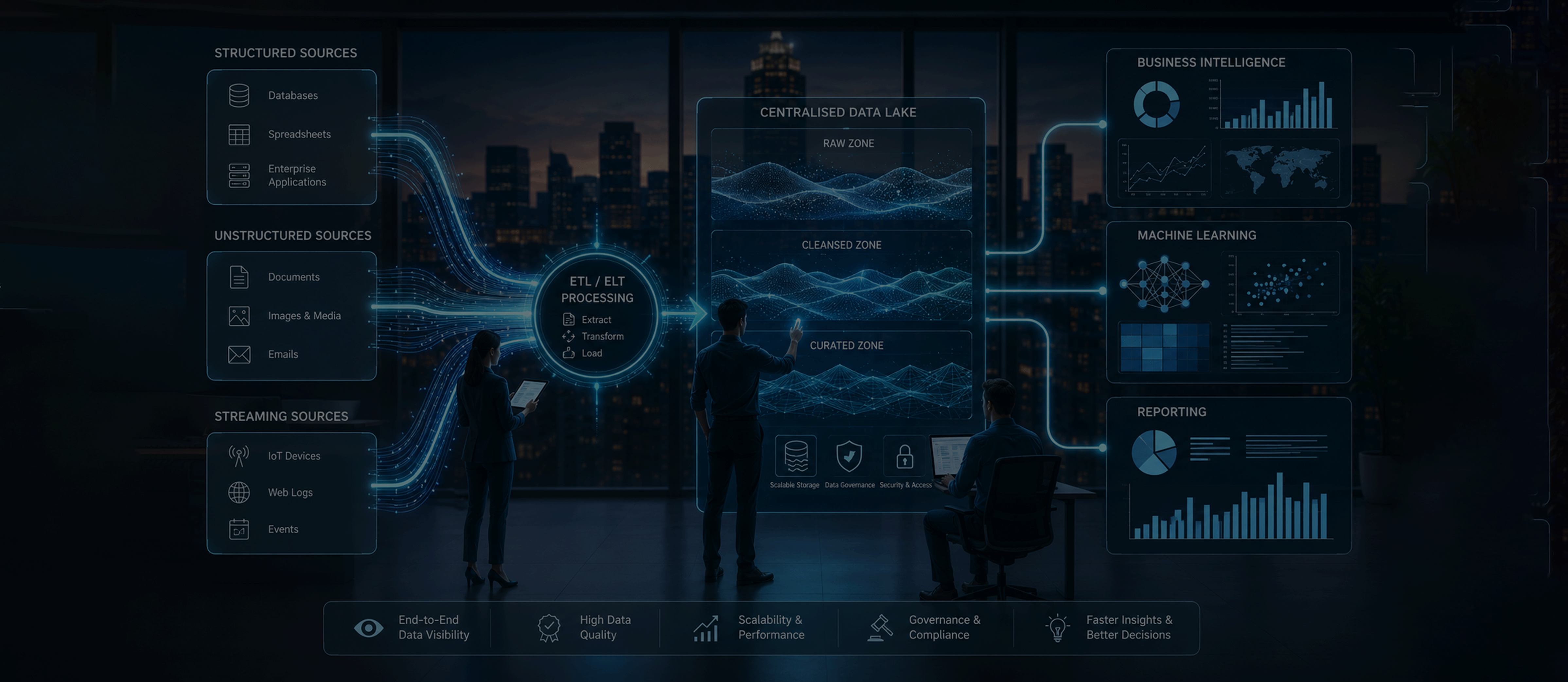
From Working to Trustworthy: Building Resilience and Observability into an Enterprise Snowflake Data Pipeline (AEP + Marketo)
How we built Snowflake data pipeline observability for an enterprise AEP and Marketo data mart — safe backfills, PK validation, task monitoring and alerts.
18 Aug 2026

Cloud-Native BSS Is Dead. Long Live Cloud-Intelligent BSS.
Discover why cloud-intelligent BSS is the future of telecom. Learn how AI-native BSS and automation go beyond cloud-native systems to drive revenue and growth.
02 Sept 2026

The Rise of eSIM-First MVNOs: Why Traditional BSS Models Will Fail
Explore why eSIM-first MVNOs need cloud-native BSS, real-time charging, automated onboarding, and Open API integration to beat legacy telecom operating models.
09 Sept 2026

How MVNO Solutions Power the Shift to Digital Brands
See how modern MVNO solutions help operators move beyond connectivity to build digital brands with flexible offers, digital onboarding, and partner ecosystems.
28 Sept 2026

MVNE Solutions Explained: What an MVNE Actually Does for New MVNOs
Explore MVNE solutions and what an MVNE does for new MVNOs, from network integration and eSIM to charging and billing, and what to look for before you launch.
05 Oct 2026

MVNO vs MVNE vs MVNx: What’s the Difference?
Learn how MVNO, MVNE, and MVNx differ in network ownership, technology, and customer control, and how to choose the right model for your telecom business.
14 Oct 2026
