
Platforms
Solutions
Products
Services
Resources
Company
About Us
Clientele
Events
Careers
Disclosures
Media Kit
Contact Us
Contact Us

Platforms
Solutions
Products
Services
Resources
Company
About Us
Clientele
Events
Careers
Disclosures
Media Kit
Contact Us
Contact Us
 Resource
The telecom industry enters 2026 with more momentum and possibilities than ever. New forces—from AI-native networks and cloud-native cores to satellite integration and early 6G development—are redefining how modern networks are designed, delivered and monetised. 2025 signalled this shift clearly: margins tightened, service commoditisation accelerated, and operators began rethinking how value is created across the ecosystem.
As we move into 2026, one theme stands out! The operators that thrive will be those that embrace intelligent, open and autonomous networks while transforming into multi-service digital platforms. The following are the top six telecom trends for 2026:
Telecom operators are shifting toward AI-native and agentic architectures that enable autonomous optimisation, predictive maintenance, and intelligent orchestration across RAN, core, and cloud layers. The global AI-in-telecom market is growing at 38% CAGR through 20301, with investments moving from NOC automation to closed-loop RAN/core optimisation, agentic provisioning, autonomous slicing, self-healing networks, and AI-governed security. Reported benefits include 30–50% MTTR reduction2, 20–25% OPEX savings3, and up to 40% fewer call-centre interactions4. Deployments are already in motion: Airtel uses agentic AI for workflow automation and real-time optimisation, and platforms such as Csmart support AI-ready workflows and multi-tenant orchestration for autonomous service delivery.
6G development is moving from research to structured global roadmaps with global 6G infrastructure spending expected to exceed $100B by the early 2030s5. With commercial momentum building around 2026, this pushes operators to prepare for new spectrum bands, AI-integrated architectures, sensing-enabled networks, and terahertz communication.
6G networks are expected to deliver <1 ms latency6, native AI processing, and high-bandwidth sensing applications — requiring early spectrum planning and cloud-native core upgrades. Operators modernising their 5G SA and edge infrastructure today can cut 6G migration costs by 20–30%7 through aligned cloud and edge foundations. Telefónica’s 6 GHz trials with Nokia and UPV highlight how mid-band spectrum validation is shaping early network evolution.
Open RAN and cloud-native cores are moving into mainstream deployment as operators seek modular, programmable, and vendor-agnostic networks. The Open RAN market is projected to grow at a 39.4% CAGR8, driven by lower TCO, vendor diversification, and hyperscaler collaboration. Standardised, disaggregated RUs can cut deployment costs by up to 30%, while public macrocells account for more than half of current revenue. Private networks are the fastest-growing segment, with a 34.6% CAGR, and Asia-Pacific leads adoption with 40.7% market share9. AT&T’s $14B, five-year Open RAN program with Ericsson—targeting 70% of traffic on open platforms by 2026—signals accelerating commercial scale.
Non-Terrestrial Networks (NTNs) are becoming central to 5G/6G strategy as satellite, HAPS, and stratospheric layers integrate into the broader architecture. The satellite communications market is expanding at a 10.2% CAGR10. NTNs extend coverage without proportional RAN CAPEX, enabling remote, maritime, and underserved-area connectivity. Direct-to-Device (D2D) services are growing from $0.57B (2025) to $2.64B (2030) at 35.6% CAGR, with 30M IoT connections expected by 203011. Early commercial milestones—such as Eutelsat/MediaTek/Airbus’ first 5G NTN connection and Starlink’s direct-to-cell partnership with Veon—demonstrate the maturation of standards and new wholesale, roaming, and enterprise revenue models. Operator priorities include satellite backhaul, hybrid terrestrial–satellite plans, NTN-ready devices, and enterprise-grade D2D offerings.
With connectivity commoditising and ARPU declining (mobile at –1.3%12 CAGR; fixed voice at –4.7% through 202813), operators are pivoting toward digital ecosystem models spanning cloud, IoT, security, fintech, and enterprise platforms. High-growth operators demonstrate that adjacent digital businesses outperform legacy telco revenue. Vodafone Business generates €8B14 annually from IoT, cloud, and security, while Singtel’s IoT and digital services are offsetting legacy declines. Investment priorities include selecting 2–3 adjacent domains, building IoT/cloud/ICT capabilities, exposing APIs through NaaS/marketplaces, and scaling specialised B2B units. Csmart supports this evolution by enabling multi-tenant partner onboarding, bundled lifecycle orchestration, and monetisation of connectivity plus digital services.
Digital-first experiences are becoming core to operator differentiation as customers expect instant onboarding, seamless roaming, and intelligent support. AI-driven CX is scaling as the AI-in-telecom market rises from $1.89B (2024) to $50B+ by 203415. AI assistants handle up to 95%16 of interactions, improving accuracy and reducing costs. Verizon’s Gemini-powered assistant processes complex billing and account queries at >90% accuracy, while Airtel and others deploy agentic AI for onboarding, upselling, and troubleshooting. eSIM-first models allow operators and MVNOs to cut acquisition costs, reduce physical distribution, and expand internationally via fully digital onboarding. The global eSIM market is projected to reach $21.75B by 2030 (12.85% CAGR)17, with travel eSIMs growing from 70M (2024) to 280M (2030)18. Digital-first and eSIM-enabled models benefit operators by simplifying device lifecycle management, remote workforce connectivity, and IoT deployments across markets without complex SIM logistics.
Telecom’s evolution in 2026 is defined by AI-native automation, 6G readiness, disaggregated networks, satellite integration, platform-driven business models, and fully digital customer journeys. Operators that act now can unlock new value pools, extend coverage, reduce costs, and deliver next-generation experiences. The challenge and opportunity lie in adopting these technologies while ensuring security, agility, and ecosystem collaboration. The future belongs to players who modernise quickly, automate intelligently, and build beyond connectivity.
To explore how Covalense Digital can accelerate your transformation, reach out to us at reachus@covalensedigital.com or fill out a quick contact form. We will be in touch with you shortly!
Author

Nandini Shivananjappa, Associate - Product GTM
Nandini is an expert in product positioning and go-to-market (GTM) strategies that drive product adoption and growth. By leveraging various market research tools and techniques, she analyses market trends and customer needs to build a bridge between the product and its target market. She also excels at presenting complex data in a visually appealing way to help teams make informed decisions.

Digital BSS: The Cornerstone of Telecom Evolution in the 5G Era
Digital BSS: The Cornerstone of Telecom Evolution in the 5G Era
20 May 2025

API Monetisation: Transform Your Digital Assets into Revenue Streams with Enterprise iPaaS
API Monetisation: Transform Your Digital Assets into Revenue Streams with Enterprise iPaaS
04 Jul 2025

How Network APIs and NaaS Are Revolutionising Telecom Monetisation: A $72 Billion Opportunity
How Network APIs and NaaS Are Revolutionising Telecom Monetisation: A $72 Billion Opportunity
11 Jul 2025

WebLogic Performance Monitoring with Prometheus and Grafana
WebLogic Performance Monitoring with Prometheus and Grafana
21 Jul 2025

Double Trouble? Not with Digital Twins in Telecom
Double Trouble? Not with Digital Twins in Telecom
22 Jul 2025

Vibe Coding: Revolutionising Software Development with AI
Vibe Coding: Revolutionising Software Development with AI
23 Jul 2025

Dynamic Rule Evaluation in Spring Boot Using Camunda DMN and REST API
Dynamic Rule Evaluation in Spring Boot Using Camunda DMN and REST API
24 Jul 2025

Generative AI in Telecommunications: Driving Innovation and Operational Transformation
Generative AI in Telecommunications: Driving Innovation and Operational Transformation
28 Jul 2025

Beyond Traditional CRM: The Distinct Features of IoT-Integrated Solutions
Beyond Traditional CRM: The Distinct Features of IoT-Integrated Solutions
29 Jul 2025

A Complete Guide to Secret Management with HashiCorp Vault
A Complete Guide to Secret Management with HashiCorp Vault
31 Jul 2025

Launching an MVNO? Go Infrastructure-Free with Csmart Digital BSS
Launching an MVNO? Go Infrastructure-Free with Csmart Digital BSS
04 Aug 2025

Role of Server-Sent Events in Reactive Programming
Role of Server-Sent Events in Reactive Programming
07 Aug 2025

Building Event-Driven Architectures Apache Kafka and Schema Registry
Building Event-Driven Architectures Apache Kafka and Schema Registry
08 Aug 2025

Understanding the Power of Digital Marketplaces in Collaborative Telecom Ecosystems
Understanding the Power of Digital Marketplaces in Collaborative Telecom Ecosystems
12 Aug 2025

Top Strategies to Implement Resilient Software Architecture in Telecom and Enterprise Industries
Top Strategies to Implement Resilient Software Architecture in Telecom and Enterprise Industries
14 Aug 2025

Open APIs and Their Role in Telecom Innovation
Open APIs and Their Role in Telecom Innovation
18 Aug 2025

Elevating Customer Service Management with ServiceNow CSM
Elevating Customer Service Management with ServiceNow CSM
20 Aug 2025

Top Six Telecom Industry Trends in 2025
Top Six Telecom Industry Trends in 2025
26 Aug 2025

Magnificence Of ServiceNow ITOM Module and Its Features
Magnificence Of ServiceNow ITOM Module and Its Features
29 Aug 2025

Moving From Cloud-Based to Cloud-Native: Unlocking The Full Potential Of Cloud Computing
Moving From Cloud-Based to Cloud-Native: Unlocking The Full Potential Of Cloud Computing
29 Aug 2025

Deep Dive into React States From Imperative to Declarative Programming
Deep Dive into React States From Imperative to Declarative Programming
02 Sept 2025

Implementing Microservices on AWS: A Value Driven Architecture
Implementing Microservices on AWS: A Value Driven Architecture
03 Sept 2025

Taming the CORS Beast
CORS errors are essential for web security, protecting users and data integrity. Developers can prevent these issues by understanding their causes and using proper server-side configurations or proxy solutions. Emphasizing security and following best practices ensures a reliable web application environment
10 Sept 2025

From Automation to Autonomy: How Agentic AI is Transforming Telecom BSS Operations
From Automation to Autonomy: How Agentic AI is Transforming Telecom BSS Operations
17 Sept 2025

From Automation to Agency: What Agentic AI Means for BSS
See how Agentic AI reshapes BSS, from orchestration to pilots. Learn why telecom operators & vendors must prepare for agent-ready, cloud-native platforms today.
24 Sept 2025

Evolutionary Journey of DevOps
DevOps is a software development methodology or culture that aims to improve collaboration, communication, integration, and automation between software development (Dev) and IT operations (Ops) teams. CI practices gained prominence with the rise of tools like Jenkins, Travis CI, GitLab, CircleCI etc.
29 Sept 2025

Cybersecurity in Telecom: Guarding the Grid Against Evolving Cyber Threats
Cybersecurity in telecom means protecting systems, networks, and data from digital attacks, unauthorized access, damage and theft. Learn more in this blog.
30 Sept 2025

The Power of AI and ML in Testing
Discover how AI and ML transform software testing with automated scenario generation, intelligent prioritisation, predictive analysis, & self-healing automation.
06 Oct 2025

AI-Powered Telecom CRM: Transforming Customer Relationships in a Competitive Market
AI-powered telecom CRM solutions transform operations. Discover its key features in this blog: predictive analytics, seamless integrations, and automations.
09 Oct 2025

The Role of Agentic AI in Digital BSS
Learn how Agentic AI revolutionises Digital BSS for telecommunications operators through autonomous, intelligent agents that enhance operational efficiency and CX.
13 Oct 2025

Top 3 AI Tools to Increase Productivity of Java Developers
Discover how AI tools like Qodo, Cursor, and Spring AI transform Java development through intelligent code generation, automated testing, and enhanced productivity.

All About 6G Technology: Features, Benefits, and The Obstacles to Widespread Adoption
Explore all about 6G technology: its features advantages, and disadvantages in this blog. See how AI, ML, and IoT will transform wireless connectivity forever.
28 Oct 2025

BSS-as-a-Service: Powering Monetisation and Customer Experience
Transform telecom operations with BSS-as-a-Service: Streamline monetisation, automate billing, enhance customer engagement, and accelerate partner settlements.
28 Oct 2025

Rewinding to Move Forward: How Agentic AI Returns Human Intelligence to Telecom Order Management
Discover how Agentic AI brings human-like intelligence to telecom order management system, enabling autonomous orchestration and zero-touch order fulfilment.
31 Oct 2025

Agentic AI in BSS: Unlocking Autonomous Operations and Customer Value in the Telco Environment
Discover Agentic AI-Powered Telecom BSS use cases in this blog. Learn how Telco Agentic AI BSS enhances networks, billing, & CX through AI/ML-driven automation.
03 Nov 2025

Seamless Horizons: Redefining Digital Integration with Enterprise API Gateway
Discover how enterprise API gateway & iPaaS simplifies integration & enhances security, while improving scalability for digital ecosystems & business operations.
07 Nov 2025

Top Seven BSS Monetisation Use Cases Driving Revenue Growth in Telecom
Discover the top 7 BSS monetisation use cases in telecommunications. Learn how Agentic AI, 5G slicing, IoT, and usage-based pricing drive revenue growth for CSPs.
12 Nov 2025

Generative AI (GenAI): Unveiling New Telecom-Centric Potential
Explore generative AI challenges/opportunities in telecom. Discover how GenAI transforms CX via personalisation, predictive analytics, & intelligent automation.
18 Nov 2025

Empowering the Digital Economy: The Rise of the Digital Marketplace
Accelerate growth with a cloud-native digital marketplace that drives omnichannel sales, improves experiences, & fuels scalable digital commerce for enterprises.
20 Nov 2025

Leading the MVNO Revolution: Foolproof Solutions to Turn Challenges into Opportunities
Discover proven solutions for MVNOs to turn challenges into opportunities through AI innovation, 5G slicing, IoT solutions, partnerships and agile strategies.
20 Nov 2025

Boosting Java Application Performance with Distributed Caching
Learn how distributed caching boosts Java application performance. Explore strategies, compare Redis, Hazelcast, and Ignite, plus Spring Boot integration tips.
27 Nov 2025

Top Seven Digital CX Strategies That Are Redefining Telecom Success
Don’t lose customers to poor service? Here are the top 7 digital customer experience (CX) strategies for telecoms that help them reduce churn and improve CSAT.
28 Nov 2025

Redefining Customer Engagement With An Advanced Customer Value Management (CVM)
Discover how an AI/ML-driven Customer Value Management (CVM), tailored campaigns, and omnichannel engagement strategies help you redefine customer experience.
02 Dec 2025

Case Management: Pioneering the Future of Telecom Customer Service
Discover how Case Management transforms customer services and support with AI-driven workflows, faster resolution, and seamless CX for modern telecom operators.
05 Dec 2025

Mastering Complexity: The Future of Telecom Sales with CPQ
Discover how CPQ transforms telecom sales by streamlining Quote-to-Order processes, enhancing pricing accuracy and delivering personalised customer experiences.
16 Dec 2025

Top Five Cloud Transformation Strategies to Succeed in the Digital Era
Explore cloud transformation strategies driving serverless, edge, and hybrid cloud adoption to reduce costs, boost agility, & lead digital innovation at scale.
29 Dec 2025

iPaaS Security Best Practices: Protecting Data Across Integration Touchpoints
Secure integration touchpoints with iPaaS security best practices. Learn how encryption, MFA, API protection, monitoring, auditing, and compliance protect data.
13 Jan 2026

Accelerate Enterprise Integration with AI-Powered Csmart iPaaS
Accelerate enterprise integration with AI-powered Csmart iPaaS. Deploy workflows 50-70% faster, monetise APIs, and scale seamlessly with intelligent automation.
13 Jan 2026

The Need for Telecom Subscription Monetisation
Discover how Csmart Digital BSS accelerates subscription monetisation for telecoms. Transform revenue management, customer lifecycle management, pricing, & more.
14 Jan 2026

Modern CRM Features Redefining Customer Engagement with AI and Automation
Explore modern CRM features: AI-powered analytics, social listening, IoT integration, and cloud platforms that transform customer engagement and drive growth.
16 Jan 2026

From Connectivity to Commerce: How MVNOs Are Evolving into Digital Marketplaces
Discover how MVNOs are moving beyond connectivity to build digital marketplaces, unlock new revenue streams, and deliver personalised customer experiences.
21 Jan 2026

Building BSS for the API Economy: Beyond Connectivity to Programmable Networks
Discover how modern BSS platforms enable telcos to monetise programmable networks and APIs. Learn how commercial intelligence layer bridges the execution gap.
22 Jan 2026

The Future of Remote IoT: How Satellite Communication and Cloud Infrastructure Transform Global Connectivity
Discover how satellite IoT & AWS cloud infrastructure revolutionise remote connectivity. Learn about Short Burst Data (SBD) solutions for global IoT deployment.
23 Jan 2026

Migrating to Oracle PDC: A Complete Guide for Telecom Pricing Transformation
Oracle Pricing Design Centre (PDC) migration guide. Proven strategies, phases, data analysis, and best practices for OBRM to PDC telecom pricing modernisation.
27 Jan 2026

AI Subscription Analytics: The New Imperative for Customer Retention
Transform subscription growth with AI analytics. Discover how agentic AI and predictive intelligence drive behavioural insights, reduce churn, and maximise CLV.
27 Jan 2026

Top 5 AI Use Cases for Business Growth in 2026
Discover top AI use cases driving business growth. Learn how Starbucks, Netflix & Nike use AI for revenue growth, customer experience, & digital transformation.
27 Jan 2026

Oracle BRM Upgrade: A Strategic Roadmap to Near-Zero Downtime Migration
Expert Oracle BRM (OBRM) upgrade guide: Includes strategic migration planning, code merge, and Golden Gate replication for near-zero downtime implementations.
03 Feb 2026

From Automation to Autonomy: How Agentic AI is Redefining Industry 4.0
Explore how agentic AI capabilities are redefining Industry 4.0—from autonomous manufacturing systems to AI-powered digital marketplaces. Learn why 5G, IoT automation, and intelligent ecosystems are critical for business survival.
06 Feb 2026

Telecom AI Agent Swarms: Multi-Agent Orchestration Across Commercial and BSS Workflows
Discover how telecom AI agent swarms enable secure, governed, E2E orchestration across BSS charging, care, catalogue, procurement, sales, and self-assistance.
19 Feb 2026

The 2026 Guide to 5G Digital BSS Monetisation: Trends, Models & Benchmarks
Explore key market trends, six core 5G revenue models, AI adoption signals and CSP revenue benchmarks shaping the 5G Digital BSS monetisation strategy in 2026.
17 Mar 2026

How Intent-Based BSS Architecture Accelerates Telecom Monetisation
Discover how Intent-based BSS architecture accelerates telecom network monetisation with real-time charging, 5G slicing support, & outcome-based pricing models.
25 Mar 2026

Stream Processing Pipeline for Near-Real-Time Data Synchronisation to Support Personalisation Use Cases
Discover how we built a near-real-time data synchronisation stream pipeline using Apache Flink & SPP, delivering 99.9% uptime, sub-100ms latency, & 40% cost savings.
13 Apr 2026

Commercial Growth: How Telcos Can Monetise Enterprise Demand and Partner Ecosystems
Explore how telcos drive enterprise monetisation using digital BSS platforms like Csmart. Unlock revenues across B2B2X, partner ecosystems, network APIs, etc.
05 May 2026

Why AI-Native Code Generation Will Rewrite the Rules of Telecom BSS Innovation
Discover how AI-native code generation transforms telecom BSS with domain-aware automation, TM Forum alignment, and enterprise-grade governance you can trust.
06 May 2026

Vespa.ai: The Engine Quietly Powering Real-Time AI Search at Scale
Discover how Vespa.ai delivers real-time AI search, hybrid retrieval, and native ML in one engine. See why it outperforms Elasticsearch & standalone vector DBs.
30 Jun 2026

How Disconnected CPQ and BSS Systems Kill Telco Revenue Opportunities
Disconnected CPQ and BSS systems cost telcos millions. Learn how integrated BSS and CPQ sales solutions eliminate errors, accelerate quotes, and boost revenue.
16 Jul 2026

Autonomous AI Agents in Telecom BSS Are Ready. Most Governance Models Aren’t.
Autonomous AI agents in telecom BSS can now act on revenue. The question CSPs must answer is who authorises those decisions — and who is accountable.
10 Aug 2026
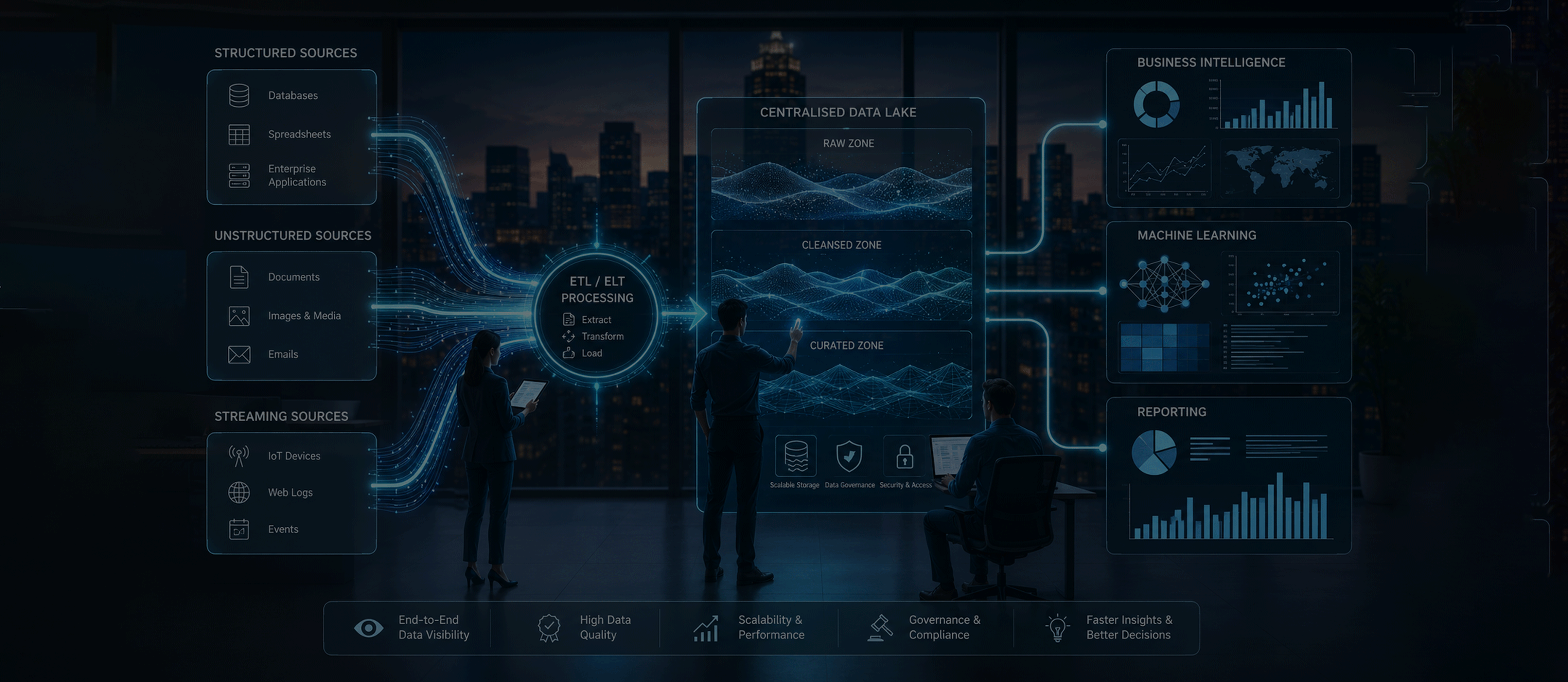
From Working to Trustworthy: Building Resilience and Observability into an Enterprise Snowflake Data Pipeline (AEP + Marketo)
How we built Snowflake data pipeline observability for an enterprise AEP and Marketo data mart — safe backfills, PK validation, task monitoring and alerts.
18 Aug 2026

Cloud-Native BSS Is Dead. Long Live Cloud-Intelligent BSS.
Discover why cloud-intelligent BSS is the future of telecom. Learn how AI-native BSS and automation go beyond cloud-native systems to drive revenue and growth.
02 Sept 2026

The Rise of eSIM-First MVNOs: Why Traditional BSS Models Will Fail
Explore why eSIM-first MVNOs need cloud-native BSS, real-time charging, automated onboarding, and Open API integration to beat legacy telecom operating models.
09 Sept 2026

How MVNO Solutions Power the Shift to Digital Brands
See how modern MVNO solutions help operators move beyond connectivity to build digital brands with flexible offers, digital onboarding, and partner ecosystems.
28 Sept 2026

MVNE Solutions Explained: What an MVNE Actually Does for New MVNOs
Explore MVNE solutions and what an MVNE does for new MVNOs, from network integration and eSIM to charging and billing, and what to look for before you launch.
05 Oct 2026

MVNO vs MVNE vs MVNx: What’s the Difference?
Learn how MVNO, MVNE, and MVNx differ in network ownership, technology, and customer control, and how to choose the right model for your telecom business.
14 Oct 2026
