
Platforms
Solutions
Products
Services
Resources
Company
About Us
Clientele
Events
Careers
Disclosures
Media Kit
Contact Us
Contact Us

Platforms
Solutions
Products
Services
Resources
Company
About Us
Clientele
Events
Careers
Disclosures
Media Kit
Contact Us
Contact Us
 Resource
Something fundamental is shifting in telecom: networks are evolving faster than the business processes meant to monetise them. Technically, programmability has accelerated dramatically. Yet commercially, even as AI enters the picture, operators still rely on workflows and systems designed for a slower, more predictable pace. It's a speed mismatch — one that has quietly become the defining commercial challenge for operators today.
The commercial architecture underneath wasn't built to operationalise AI-driven product innovation at network speed. This gap is widening precisely when operators need to capture new forms of value beyond traditional connectivity. Programmable networks unlock unprecedented possibilities — but programmability without commercial readiness doesn't generate revenue.
This blog starts from a simple observation: The next phase of telco growth won't be determined by how programmable networks become, but by how quickly operators can turn that programmability into products businesses can understand, buy, and scale. That's the dynamic shaping the industry now — and the competitive frontier forming around it.
Exposure platforms are maturing. Network APIs are multiplying. Enterprises are asking sharper, more capability-specific questions. And AI is now capable of shaping pricing, packaging, and product constructs in real time. Individually, these developments appear to be technical progress. Together, they signal the emergence of a race — unspoken but already underway — to build the intelligence layer that determines how network capabilities become revenue.
The race might be quiet, but the signals are everywhere: vendors repositioning their portfolios, operators rethinking their product operating models, and ecosystem players expanding upward into the monetisation terrain that was once exclusively the operator domain.
This intelligence layer must do things the traditional commercial stack was never designed for:
This layer is becoming the strategic core of how Communication Service Providers (CSPs) participate in the API economy, as its sophistication directly determines the commercial value operators can extract from programmable networks.
If programmable networks are the new raw material of value, then the real constraint today isn't exposure — it's execution. Commercial readiness at network speed is more than automation; it is the organisational ability to turn a newly exposed capability into a market-ready product, often within days rather than months. At its core, this layer reconciles two realities: the rapid evolution of network capabilities and the structured requirements of commercial execution.
The goal of the commercial intelligence layer is to automate product thinking; it operates by:
This separation of concerns means network evolution and commercial innovation can proceed at their own natural pace without creating bottlenecks.
Programmable networks introduce consumption patterns that cannot be fully predicted upfront. APIs behave differently across applications, partners, and enterprise use cases. Usage profiles emerge organically as adoption scales. Pricing and monetisation must therefore be adaptive, not pre-defined.
A commercial intelligence layer must support:
The intelligence here lies in the platform's ability to learn from usage patterns and surface pricing opportunities that manual analysis would miss.
AI's role in this layer is not to replace commercial decision-making, but to augment it strategically. That means:
Without this operational context, AI remains an advisor generating insights that require manual translation. With it, AI becomes a co-pilot that actively shapes commercial execution.
Perhaps the most critical requirement of this layer is speed — not just technical speed, but organisational speed that compresses time-to-market:
This demands a modular, API-driven commercial architecture that can evolve independently whilst remaining aligned with network behaviour and ensuring commercial integrity across all touchpoints.
The description above of the commercial intelligence layer is not merely a theoretical construct. Platforms are emerging today that embody many of the essential capabilities required for operators to compete effectively in the API economy.
Csmart, a cloud-native Digital BSS platform, is designed to deliver the commercial readiness that programmable networks demand. Built on microservices architecture and TM Forum standards, it provides the flexibility, speed, and intelligence operators need to monetise network capabilities at scale.
Here’s how Csmart maps to the commercial layer capabilities we’ve outlined:
|
Commercial Layer Requirement |
How Csmart Aligns |
|
Translate network capabilities into products |
Central product catalogue with model-driven configuration producing outcome-based commercial offers |
|
Flexible and dynamic monetisation |
Real-time charging engine and convergent billing supporting multiple pricing models simultaneously |
|
AI-enhanced commercial intelligence |
AI-driven insights and analytics for churn prediction, pricing optimisation, and demand forecasting |
|
Integration with ecosystems and standards |
API-first architecture with TM Forum Open API compliance ensuring seamless partner integration |
|
Support multi-segment business models |
Multi-tenant architecture supporting B2C, B2B, wholesale, and MVNO segments from a single platform |
|
Shortened concept-to-cash cycles |
End-to-end digital BSS suite eliminating handoffs between product, billing, and revenue assurance |
Csmart's architecture embodies the principle that commercial systems must keep pace with network agility. Its modular design allows operators to deploy capabilities progressively, starting with high-priority use cases and expanding as API monetisation matures.
The shift towards programmable networks has moved beyond theory. Network APIs are live, enterprise demand is growing, and ecosystem partnerships are forming. Now is the time for operators to evaluate honestly how ready their commercial architecture is for the API economy. If the answer is not yet clear, then the commercial intelligence layer deserves as much strategic attention and investment as the network infrastructure itself.
Csmart is built to help operators close this gap decisively. It demonstrates that the commercial intelligence layer for programmable networks is not an abstract future product — it can be built today using modern cloud-native, API-first, and standards-aligned technologies. It enables operators not only to expose network capabilities but to commercialise them with precision, flexibility, and speed — a fundamental prerequisite for winning in the API economy.
The operators who build this capability first will define the commercial models that others follow. The question isn't whether to build this layer, but how quickly you can deploy it.
To learn more about how Csmart supports monetisation in the API economy, contact us at reachus@covalensedigital.com or fill out a form here.
Author

Nandini Shivananjappa, Associate - Product GTM
Nandini is an expert in product positioning and go-to-market (GTM) strategies that drive product adoption and growth. By leveraging various market research tools and techniques, she analyses market trends and customer needs to build a bridge between the product and its target market. She also excels at presenting complex data in a visually appealing way to help teams make informed decisions.

Digital BSS: The Cornerstone of Telecom Evolution in the 5G Era
Digital BSS: The Cornerstone of Telecom Evolution in the 5G Era
20 May 2025

API Monetisation: Transform Your Digital Assets into Revenue Streams with Enterprise iPaaS
API Monetisation: Transform Your Digital Assets into Revenue Streams with Enterprise iPaaS
04 Jul 2025

How Network APIs and NaaS Are Revolutionising Telecom Monetisation: A $72 Billion Opportunity
How Network APIs and NaaS Are Revolutionising Telecom Monetisation: A $72 Billion Opportunity
11 Jul 2025

WebLogic Performance Monitoring with Prometheus and Grafana
WebLogic Performance Monitoring with Prometheus and Grafana
21 Jul 2025

Double Trouble? Not with Digital Twins in Telecom
Double Trouble? Not with Digital Twins in Telecom
22 Jul 2025

Vibe Coding: Revolutionising Software Development with AI
Vibe Coding: Revolutionising Software Development with AI
23 Jul 2025

Dynamic Rule Evaluation in Spring Boot Using Camunda DMN and REST API
Dynamic Rule Evaluation in Spring Boot Using Camunda DMN and REST API
24 Jul 2025

Generative AI in Telecommunications: Driving Innovation and Operational Transformation
Generative AI in Telecommunications: Driving Innovation and Operational Transformation
28 Jul 2025

Beyond Traditional CRM: The Distinct Features of IoT-Integrated Solutions
Beyond Traditional CRM: The Distinct Features of IoT-Integrated Solutions
29 Jul 2025

A Complete Guide to Secret Management with HashiCorp Vault
A Complete Guide to Secret Management with HashiCorp Vault
31 Jul 2025

Launching an MVNO? Go Infrastructure-Free with Csmart Digital BSS
Launching an MVNO? Go Infrastructure-Free with Csmart Digital BSS
04 Aug 2025

Role of Server-Sent Events in Reactive Programming
Role of Server-Sent Events in Reactive Programming
07 Aug 2025

Building Event-Driven Architectures Apache Kafka and Schema Registry
Building Event-Driven Architectures Apache Kafka and Schema Registry
08 Aug 2025

Understanding the Power of Digital Marketplaces in Collaborative Telecom Ecosystems
Understanding the Power of Digital Marketplaces in Collaborative Telecom Ecosystems
12 Aug 2025

Top Strategies to Implement Resilient Software Architecture in Telecom and Enterprise Industries
Top Strategies to Implement Resilient Software Architecture in Telecom and Enterprise Industries
14 Aug 2025

Open APIs and Their Role in Telecom Innovation
Open APIs and Their Role in Telecom Innovation
18 Aug 2025

Elevating Customer Service Management with ServiceNow CSM
Elevating Customer Service Management with ServiceNow CSM
20 Aug 2025

Top Six Telecom Industry Trends in 2025
Top Six Telecom Industry Trends in 2025
26 Aug 2025

Magnificence Of ServiceNow ITOM Module and Its Features
Magnificence Of ServiceNow ITOM Module and Its Features
29 Aug 2025

Moving From Cloud-Based to Cloud-Native: Unlocking The Full Potential Of Cloud Computing
Moving From Cloud-Based to Cloud-Native: Unlocking The Full Potential Of Cloud Computing
29 Aug 2025

Deep Dive into React States From Imperative to Declarative Programming
Deep Dive into React States From Imperative to Declarative Programming
02 Sept 2025

Implementing Microservices on AWS: A Value Driven Architecture
Implementing Microservices on AWS: A Value Driven Architecture
03 Sept 2025

Taming the CORS Beast
CORS errors are essential for web security, protecting users and data integrity. Developers can prevent these issues by understanding their causes and using proper server-side configurations or proxy solutions. Emphasizing security and following best practices ensures a reliable web application environment
10 Sept 2025

From Automation to Autonomy: How Agentic AI is Transforming Telecom BSS Operations
From Automation to Autonomy: How Agentic AI is Transforming Telecom BSS Operations
17 Sept 2025

From Automation to Agency: What Agentic AI Means for BSS
See how Agentic AI reshapes BSS, from orchestration to pilots. Learn why telecom operators & vendors must prepare for agent-ready, cloud-native platforms today.
24 Sept 2025

Evolutionary Journey of DevOps
DevOps is a software development methodology or culture that aims to improve collaboration, communication, integration, and automation between software development (Dev) and IT operations (Ops) teams. CI practices gained prominence with the rise of tools like Jenkins, Travis CI, GitLab, CircleCI etc.
29 Sept 2025

Cybersecurity in Telecom: Guarding the Grid Against Evolving Cyber Threats
Cybersecurity in telecom means protecting systems, networks, and data from digital attacks, unauthorized access, damage and theft. Learn more in this blog.
30 Sept 2025

The Power of AI and ML in Testing
Discover how AI and ML transform software testing with automated scenario generation, intelligent prioritisation, predictive analysis, & self-healing automation.
06 Oct 2025

AI-Powered Telecom CRM: Transforming Customer Relationships in a Competitive Market
AI-powered telecom CRM solutions transform operations. Discover its key features in this blog: predictive analytics, seamless integrations, and automations.
09 Oct 2025

The Role of Agentic AI in Digital BSS
Learn how Agentic AI revolutionises Digital BSS for telecommunications operators through autonomous, intelligent agents that enhance operational efficiency and CX.
13 Oct 2025

Top 3 AI Tools to Increase Productivity of Java Developers
Discover how AI tools like Qodo, Cursor, and Spring AI transform Java development through intelligent code generation, automated testing, and enhanced productivity.

All About 6G Technology: Features, Benefits, and The Obstacles to Widespread Adoption
Explore all about 6G technology: its features advantages, and disadvantages in this blog. See how AI, ML, and IoT will transform wireless connectivity forever.
28 Oct 2025

BSS-as-a-Service: Powering Monetisation and Customer Experience
Transform telecom operations with BSS-as-a-Service: Streamline monetisation, automate billing, enhance customer engagement, and accelerate partner settlements.
28 Oct 2025

Rewinding to Move Forward: How Agentic AI Returns Human Intelligence to Telecom Order Management
Discover how Agentic AI brings human-like intelligence to telecom order management system, enabling autonomous orchestration and zero-touch order fulfilment.
31 Oct 2025

Agentic AI in BSS: Unlocking Autonomous Operations and Customer Value in the Telco Environment
Discover Agentic AI-Powered Telecom BSS use cases in this blog. Learn how Telco Agentic AI BSS enhances networks, billing, & CX through AI/ML-driven automation.
03 Nov 2025

Seamless Horizons: Redefining Digital Integration with Enterprise API Gateway
Discover how enterprise API gateway & iPaaS simplifies integration & enhances security, while improving scalability for digital ecosystems & business operations.
07 Nov 2025

Top Seven BSS Monetisation Use Cases Driving Revenue Growth in Telecom
Discover the top 7 BSS monetisation use cases in telecommunications. Learn how Agentic AI, 5G slicing, IoT, and usage-based pricing drive revenue growth for CSPs.
12 Nov 2025

Generative AI (GenAI): Unveiling New Telecom-Centric Potential
Explore generative AI challenges/opportunities in telecom. Discover how GenAI transforms CX via personalisation, predictive analytics, & intelligent automation.
18 Nov 2025

Empowering the Digital Economy: The Rise of the Digital Marketplace
Accelerate growth with a cloud-native digital marketplace that drives omnichannel sales, improves experiences, & fuels scalable digital commerce for enterprises.
20 Nov 2025

Leading the MVNO Revolution: Foolproof Solutions to Turn Challenges into Opportunities
Discover proven solutions for MVNOs to turn challenges into opportunities through AI innovation, 5G slicing, IoT solutions, partnerships and agile strategies.
20 Nov 2025

Boosting Java Application Performance with Distributed Caching
Learn how distributed caching boosts Java application performance. Explore strategies, compare Redis, Hazelcast, and Ignite, plus Spring Boot integration tips.
27 Nov 2025

Top Seven Digital CX Strategies That Are Redefining Telecom Success
Don’t lose customers to poor service? Here are the top 7 digital customer experience (CX) strategies for telecoms that help them reduce churn and improve CSAT.
28 Nov 2025

Redefining Customer Engagement With An Advanced Customer Value Management (CVM)
Discover how an AI/ML-driven Customer Value Management (CVM), tailored campaigns, and omnichannel engagement strategies help you redefine customer experience.
02 Dec 2025

Case Management: Pioneering the Future of Telecom Customer Service
Discover how Case Management transforms customer services and support with AI-driven workflows, faster resolution, and seamless CX for modern telecom operators.
05 Dec 2025

Top Six Telecom Trends For 2026
Expert insights on top six telecom trends 2026: Agentic AI networks, 6G readiness, Open RAN, satellite connectivity, digital ecosystems, & eSIM transformation.
11 Dec 2025

Mastering Complexity: The Future of Telecom Sales with CPQ
Discover how CPQ transforms telecom sales by streamlining Quote-to-Order processes, enhancing pricing accuracy and delivering personalised customer experiences.
16 Dec 2025

Top Five Cloud Transformation Strategies to Succeed in the Digital Era
Explore cloud transformation strategies driving serverless, edge, and hybrid cloud adoption to reduce costs, boost agility, & lead digital innovation at scale.
29 Dec 2025

iPaaS Security Best Practices: Protecting Data Across Integration Touchpoints
Secure integration touchpoints with iPaaS security best practices. Learn how encryption, MFA, API protection, monitoring, auditing, and compliance protect data.
13 Jan 2026

Accelerate Enterprise Integration with AI-Powered Csmart iPaaS
Accelerate enterprise integration with AI-powered Csmart iPaaS. Deploy workflows 50-70% faster, monetise APIs, and scale seamlessly with intelligent automation.
13 Jan 2026

The Need for Telecom Subscription Monetisation
Discover how Csmart Digital BSS accelerates subscription monetisation for telecoms. Transform revenue management, customer lifecycle management, pricing, & more.
14 Jan 2026

Modern CRM Features Redefining Customer Engagement with AI and Automation
Explore modern CRM features: AI-powered analytics, social listening, IoT integration, and cloud platforms that transform customer engagement and drive growth.
16 Jan 2026

From Connectivity to Commerce: How MVNOs Are Evolving into Digital Marketplaces
Discover how MVNOs are moving beyond connectivity to build digital marketplaces, unlock new revenue streams, and deliver personalised customer experiences.
21 Jan 2026

The Future of Remote IoT: How Satellite Communication and Cloud Infrastructure Transform Global Connectivity
Discover how satellite IoT & AWS cloud infrastructure revolutionise remote connectivity. Learn about Short Burst Data (SBD) solutions for global IoT deployment.
23 Jan 2026

Migrating to Oracle PDC: A Complete Guide for Telecom Pricing Transformation
Oracle Pricing Design Centre (PDC) migration guide. Proven strategies, phases, data analysis, and best practices for OBRM to PDC telecom pricing modernisation.
27 Jan 2026

AI Subscription Analytics: The New Imperative for Customer Retention
Transform subscription growth with AI analytics. Discover how agentic AI and predictive intelligence drive behavioural insights, reduce churn, and maximise CLV.
27 Jan 2026

Top 5 AI Use Cases for Business Growth in 2026
Discover top AI use cases driving business growth. Learn how Starbucks, Netflix & Nike use AI for revenue growth, customer experience, & digital transformation.
27 Jan 2026

Oracle BRM Upgrade: A Strategic Roadmap to Near-Zero Downtime Migration
Expert Oracle BRM (OBRM) upgrade guide: Includes strategic migration planning, code merge, and Golden Gate replication for near-zero downtime implementations.
03 Feb 2026

From Automation to Autonomy: How Agentic AI is Redefining Industry 4.0
Explore how agentic AI capabilities are redefining Industry 4.0—from autonomous manufacturing systems to AI-powered digital marketplaces. Learn why 5G, IoT automation, and intelligent ecosystems are critical for business survival.
06 Feb 2026

Telecom AI Agent Swarms: Multi-Agent Orchestration Across Commercial and BSS Workflows
Discover how telecom AI agent swarms enable secure, governed, E2E orchestration across BSS charging, care, catalogue, procurement, sales, and self-assistance.
19 Feb 2026

The 2026 Guide to 5G Digital BSS Monetisation: Trends, Models & Benchmarks
Explore key market trends, six core 5G revenue models, AI adoption signals and CSP revenue benchmarks shaping the 5G Digital BSS monetisation strategy in 2026.
17 Mar 2026

How Intent-Based BSS Architecture Accelerates Telecom Monetisation
Discover how Intent-based BSS architecture accelerates telecom network monetisation with real-time charging, 5G slicing support, & outcome-based pricing models.
25 Mar 2026

Stream Processing Pipeline for Near-Real-Time Data Synchronisation to Support Personalisation Use Cases
Discover how we built a near-real-time data synchronisation stream pipeline using Apache Flink & SPP, delivering 99.9% uptime, sub-100ms latency, & 40% cost savings.
13 Apr 2026

Commercial Growth: How Telcos Can Monetise Enterprise Demand and Partner Ecosystems
Explore how telcos drive enterprise monetisation using digital BSS platforms like Csmart. Unlock revenues across B2B2X, partner ecosystems, network APIs, etc.
05 May 2026

Why AI-Native Code Generation Will Rewrite the Rules of Telecom BSS Innovation
Discover how AI-native code generation transforms telecom BSS with domain-aware automation, TM Forum alignment, and enterprise-grade governance you can trust.
06 May 2026

Vespa.ai: The Engine Quietly Powering Real-Time AI Search at Scale
Discover how Vespa.ai delivers real-time AI search, hybrid retrieval, and native ML in one engine. See why it outperforms Elasticsearch & standalone vector DBs.
30 Jun 2026

How Disconnected CPQ and BSS Systems Kill Telco Revenue Opportunities
Disconnected CPQ and BSS systems cost telcos millions. Learn how integrated BSS and CPQ sales solutions eliminate errors, accelerate quotes, and boost revenue.
16 Jul 2026

Autonomous AI Agents in Telecom BSS Are Ready. Most Governance Models Aren’t.
Autonomous AI agents in telecom BSS can now act on revenue. The question CSPs must answer is who authorises those decisions — and who is accountable.
10 Aug 2026
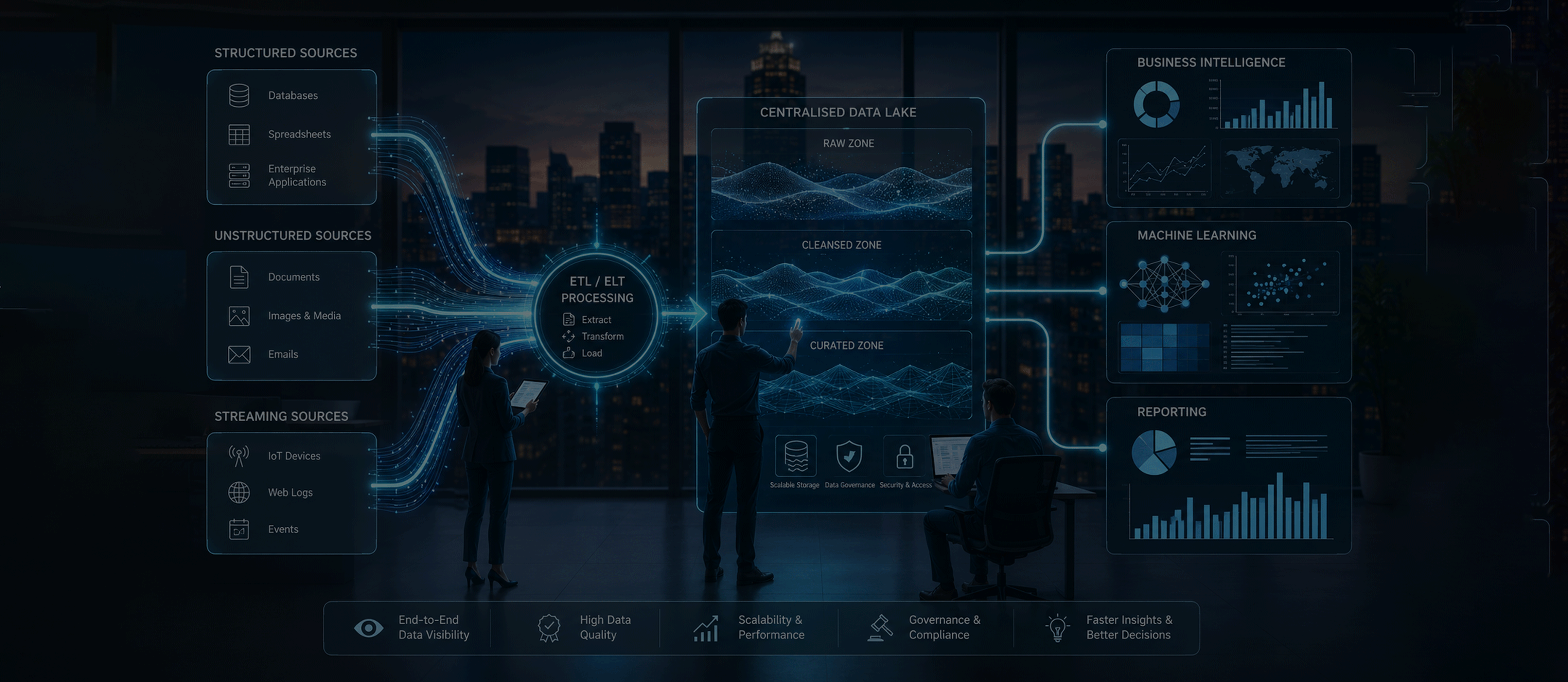
From Working to Trustworthy: Building Resilience and Observability into an Enterprise Snowflake Data Pipeline (AEP + Marketo)
How we built Snowflake data pipeline observability for an enterprise AEP and Marketo data mart — safe backfills, PK validation, task monitoring and alerts.
18 Aug 2026

Cloud-Native BSS Is Dead. Long Live Cloud-Intelligent BSS.
Discover why cloud-intelligent BSS is the future of telecom. Learn how AI-native BSS and automation go beyond cloud-native systems to drive revenue and growth.
02 Sept 2026

The Rise of eSIM-First MVNOs: Why Traditional BSS Models Will Fail
Explore why eSIM-first MVNOs need cloud-native BSS, real-time charging, automated onboarding, and Open API integration to beat legacy telecom operating models.
09 Sept 2026

How MVNO Solutions Power the Shift to Digital Brands
See how modern MVNO solutions help operators move beyond connectivity to build digital brands with flexible offers, digital onboarding, and partner ecosystems.
28 Sept 2026

MVNE Solutions Explained: What an MVNE Actually Does for New MVNOs
Explore MVNE solutions and what an MVNE does for new MVNOs, from network integration and eSIM to charging and billing, and what to look for before you launch.
05 Oct 2026

MVNO vs MVNE vs MVNx: What’s the Difference?
Learn how MVNO, MVNE, and MVNx differ in network ownership, technology, and customer control, and how to choose the right model for your telecom business.
14 Oct 2026
